Materials Engineering
Injection Molding Optimization
Overview:
The original injection-molded component was identified as over-designed in terms of material usage, resulting in unnecessary cost and longer cycle times without contributing additional functional performance. The geometry relied on bulk material for stiffness rather than efficient structural features, and lacked optimized draft angles for robust manufacturability.
Approach:
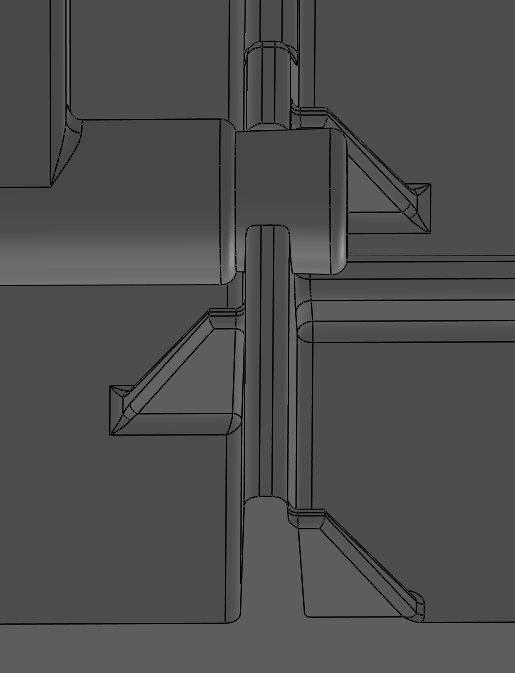
The redesign replaced excess material with a rib-reinforced structure to improve stiffness-to-weight efficiency while preserving key load paths. Rib geometry was tuned to maintain structural performance with reduced wall thickness, enabling significant material savings without compromising strength. Appropriate draft angles were then applied across all vertical faces to improve mold release, reduce tooling stress, and support consistent high-volume production. The combined approach improved manufacturability, reduced material usage, and enhanced overall production efficiency while maintaining structural integrity.

Technical specifications:
Material: Nylon-GF
Weight reduction: Up to 20%
Production Impact: Estimated 10% cycle time reduction and up to 15% cost efficiency improvement
Manufacturing Improvement: Reduced tooling stress, improved part release, lower defect risk
Load capacity: Maintained or improved stiffness-to-weight performance
Methods: Rib-reinforced structural redesign replacing bulk material
Results:
The optimized design achieved a significant reduction in material usage while maintaining the required structural performance through efficient rib reinforcement. By replacing bulk geometry with load-path-aligned ribs and implementing proper draft angles, the part improved manufacturability and molding consistency. The redesign is estimated to reduce material consumption, while maintaining or improving stiffness-to-weight performance. Manufacturing efficiency was also improved through reduced cycle time and improved part ejection, resulting in a lower-cost, more production-ready design with enhanced repeatability and tooling reliability.
20%
Material Reduction
15%
Cost Savings
10%
Decrease in Cycle Time